Invisalign vs Braces: Which Is Right for Your Smile?
Deciding to improve your smile is exciting but comes with important choices. Orthodontic treatment is an investment in your confidence and oral health, and selecting the correct method for you is essential.
Invisalign and traditional braces are 2 standard options for orthodontic correction. While Invisalign can offer a more discreet way of straightening your teeth, traditional braces may be more effective for more complex cases of misalignment. Ultimately, you should consult with your dentist to determine the best type of orthodontic correction for you.
What Is Invisalign & How Does It Work?
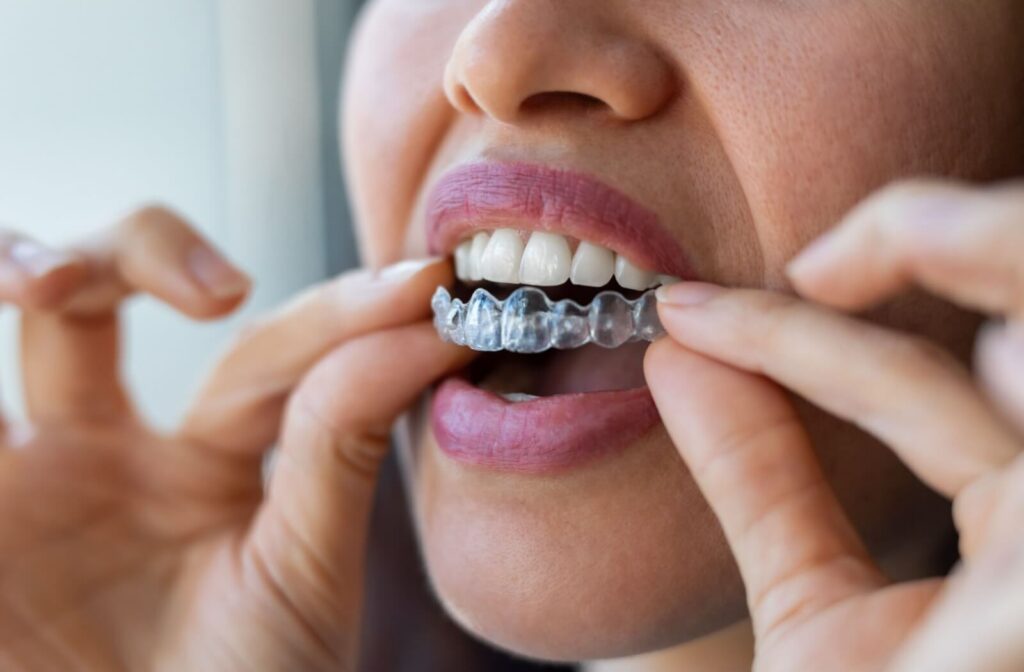
Invisalign is a modern teeth-straightening system. Instead of brackets and wires, Invisalign uses custom-made, clear plastic aligners designed to fit snugly over your teeth. These aligners apply gentle, consistent pressure to gradually move your teeth to their desired positions.
You’ll change to a new set of aligners approximately every week (or according to your orthodontist’s instruction), each taking you closer to your perfect smile. The aligners are removable, making Invisalign a discreet and flexible option for orthodontic treatment.
Discreet appearance: The clear aligners are virtually invisible, which makes them ideal for adults and teens who want orthodontic treatment without the noticeable look of braces.
Removability: You can remove Invisalign aligners for eating, brushing, and flossing—unlike traditional braces which are immovable except by a dentist or orthodontist.
Comfort: Clear aligners can be more comfortable than braces, with no wires or brackets to irritate your mouth.
Fewer orthodontist visits: Invisalign treatment can require fewer follow-up visits to your orthodontist.
People with severe misalignment, deep bites or more complex orthodontic issues may require traditional braces for effective correction. Your orthodontist can help determine if Invisalign is right for you.
What Are Traditional Braces & How Do They Work?
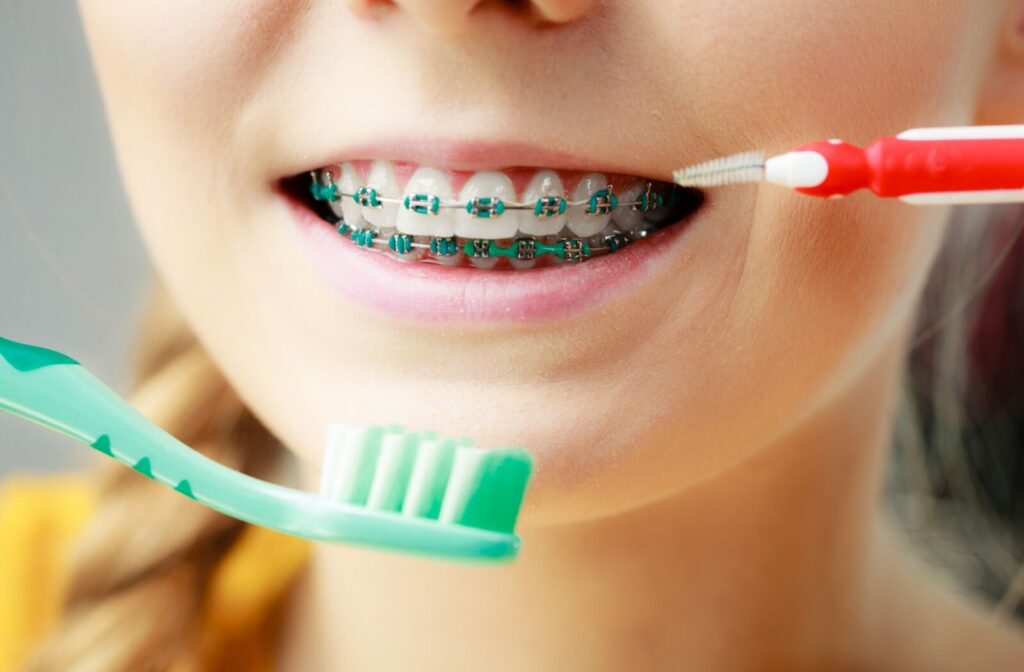
Traditional braces are devices used in orthodontics to gradually push teeth into alignment. There are several types of traditional braces, the most common being metal or ceramic. In both cases, your dentist or orthodontist bonds a bracket on each tooth, and then places a thin, flexible archwire over the brackets—ceramic braces are clear or tooth coloured instead of metal.
Your dentist or orthodontist may make adjustments periodically to ensure proper progression and alignment.
Advantages of Traditional Braces
There are some clear benefits of opting for braces as an orthodontic treatment option, like:
Highly effective for complex cases: Braces are often more precise in correcting severe misalignments, complicated bite issues, and other structural problems.
Durability: Brackets are fixed in place, so there’s no risk of losing or forgetting to wear them, and regular checkups ensure your dentist can replace worn brackets.
Variety of options: Modern braces come in a variety of materials to suit different cases.
Disadvantages of Traditional Braces
While braces are effective, they also come with some drawbacks:
Visibility: Traditional braces are more noticeable, which can be a concern for some people who want a discreet option.
Dietary restrictions: Hard and sticky foods can damage braces and are typically off-limits during treatment—braces also take an active hygiene routine to keep them clean.
Discomfort: The brackets and wires can sometimes initially irritate the inside of your mouth, and adjustments may cause temporary soreness after the braces are first placed.
Who Is the Best Candidate for Braces?
Braces are usually recommended to those who need comprehensive orthodontic treatment. Braces may be the most effective solution if your dental issues include severe crowding, significant bite problems, overbites or other complex challenges.
The Decision-Making Process
Deciding between Invisalign and braces isn’t just about the features—it’s about what works best for your lifestyle and orthodontic requirements. Your dentist can provide the most accurate and applicable advice, but here are some factors to consider:
Complexity of your case: If you have a severe bite issue or need significant correction, braces are likely the better option.
Aesthetic preferences: If you don’t need massive corrections and you’re concerned about aesthetics, then Invisalign offers an almost-invisible alternative.
Commitment to wearing aligners: Invisalign requires consistent wear to maintain effectiveness, so if you think you might forget to wear them, braces may be a better choice.
Budget: Costs for both options can vary, so it’s worth exploring financial plans or insurance coverage to determine what’s feasible for you.
Your Smile, Your Choice
Choosing between Invisalign and braces is a significant decision with multiple things to consider, but it doesn’t have to be overwhelming. By understanding the differences and consulting an experienced orthodontist, you can make a choice that aligns with your goals and lifestyle.
Remember, the end goal is the same—a confident, healthy smile you’ll love.
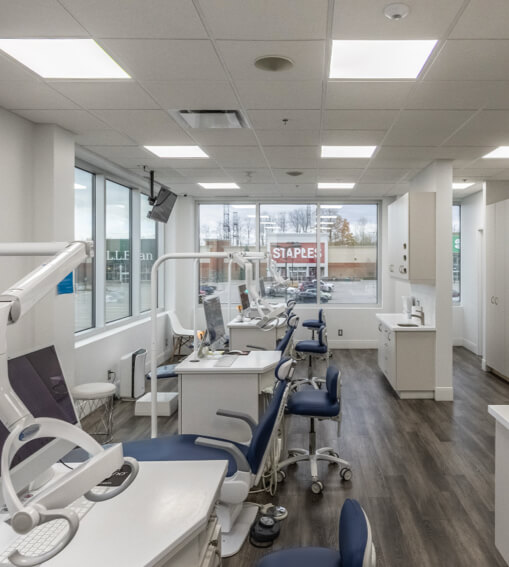
Find us in The Boardwalk shopping centre on the second floor of building 235. We’re just across the parking lot from Staples and above Popeyes and Booster Juice.
Thinking about straightening your teeth often raises 1 big question: How long will this take? At Orthodontic Smile Studio, our team knows you want a smile you feel great about, and you also want to know what the journey looks like. It’s completely normal to be curious about what you’re signing up for. It’s important […]
For starters, drinking coffee while wearing your aligners is not recommended. You can, however, remove your aligners and drink coffee while they’re off. […]
A clicking noise when you use your jaw can have many causes, including bruxism (teeth grinding) and malocclusion (bite misalignment), but a common cause that we’ll focus on in this post is temporomandibular joint (TMJ) disorder.
[…]
Every time you remove your aligners to eat or drink, make a habit of rinsing them with cold or lukewarm water, along with a daily deep cleaning to keep them bacteria-free. Here are 4 simple and effective methods:
Invisalign Cleaning System
A Soft-bristled Toothbrush (sans toothpaste)
Retainer Cleaning Tablets
White Vinegar Solution
[…]
When flossing with braces, use the flossing tool of your choice to curve the floss in a “C” shape around each tooth. You can use a floss threader to help pull the floss underneath your braces to clean deeper. You can also use a water flosser if needed. […]
Getting braces can bring numerous positive changes to your smile. But along with the excitement of improving your bite or teeth positioning comes the responsibility of caring for your braces. One of the most important adjustments? Changing what you eat. Certain foods, such as hard or sticky snacks can damage your braces, causing discomfort and […]
Can You Eat Popcorn with Braces? 10 Foods to Avoid
Discover 10 foods to avoid with braces and learn tips from Orthodontic Smile Studio for braces-friendly eating to keep your smile healthy and strong! […]
How an orthodontist corrects dental issues like overbite and misalignment. A beautiful smile is magnetic. It boosts confidence and creates a positive first impression. If you’re […]
What to expect when getting braces, along with tips on how to adjust to your orthodontic appliance. If you’re being fitted for braces, you’re probably curious how the process will […]
Here’s what you can expect after getting dental braces. Thinking about getting dental braces but worried that they might hurt? Dental braces are an orthodontic appliance […]
Here’s when children can start coming in for an orthodontic evaluation. Having a straight set of teeth improves oral health and boosts self-confidence. Teeth that are properly […]
Here’s a list of food you can enjoy while wearing braces. Your diet doesn’t have to be boring because you’re getting orthodontic work. What can I eat with braces? Obviously […]
What is the difference between an Orthodontist and a Dentist?
Hi! I’m Dr. Caley Höediono. I have noticed some confusion people have between orthodontists and dentists; and I’m here to offer clarity from an orthodontist’s viewpoint. […]
What Is the Difference Between Braces & Invisalign?
Discover the difference between braces and Invisalign and what’s right for your smile with Dr. Caley Hoediono at Orthodontic Smile Studio in Kitchener. […]
5 Benefits of Early Orthodontic Treatment for Growing Smiles
Discover how early orthodontic care can improve alignment, prevent dental issues, & boost your child’s confidence for a lifetime of healthy smiles. […]
Getting Braces as an Adult: What to Expect from the Process
Looking for adult braces in Kitchener, ON? Discover what to expect, including treatment time, pain, & available options with Orthodontic Smile Studio. […]